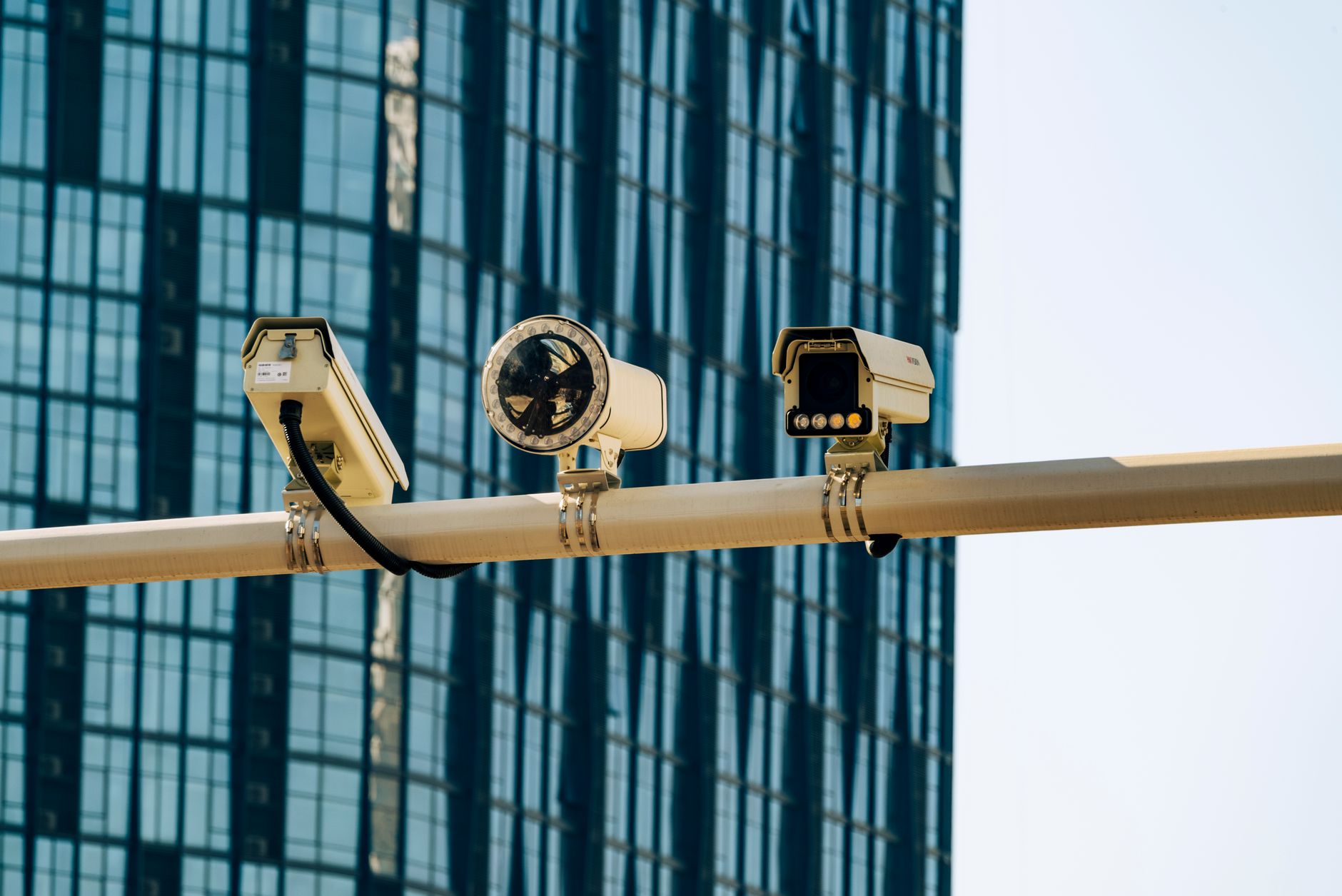
Thermal imaging for critical infrastructure protection uses infrared radiation to detect people, vehicles, vessels, fires, overheated components, and abnormal thermal signatures around assets whose disruption would affect public safety, energy delivery, transport, water supply, communications, or industrial continuity. Unlike visible cameras, thermal cameras do not depend on scene illumination, so they are widely used for night surveillance, fog-affected perimeters, restricted zones, substations, ports, airports, data centers, pipelines, and remote utility corridors. For OEM engineers, the central design problem is not only selecting a detector, but matching wavelength band, resolution, optics, interface, processing, environmental sealing, cybersecurity, and lifecycle support to the operational risk model.
How Does Thermal Imaging for Critical Infrastructure Protection Work?
Thermal imaging systems convert infrared radiation from objects and backgrounds into a temperature-related image. In security applications, the objective is often detection and classification rather than precise temperature measurement. A person, vehicle engine, transformer bushing, hot bearing, flare, or smoldering material may appear with useful contrast against the surrounding scene even when visible contrast is low.
Most perimeter and wide-area systems use long-wave infrared, or LWIR, typically around 8-14 micrometers. Uncooled LWIR modules are attractive because they operate without a cryocooler, reducing size, power, acoustic output, and maintenance burden. A module such as SPECTRA L06A 640x512 LWIR 12um is suited to compact fixed cameras, pan-tilt-zoom payloads, and embedded security platforms where continuous operation and practical cost are important. Higher-resolution LWIR modules, such as SPECTRA L12NT 1280x1024 LWIR, support wider fields of view at the same target pixel density or longer recognition ranges with appropriate optics.
Cooled mid-wave infrared, or MWIR, typically operates around 3-5 micrometers and offers higher sensitivity and faster integration for demanding long-range detection, maritime surveillance, airborne monitoring, and high-temperature target observation. Cooled modules require more power and include a cryogenic cooler, but they can improve range performance and image quality when the mission justifies the complexity. For long-range border, port, and airfield surveillance, SPECTRA M12A 1280x1024 Cooled MWIR can provide the resolution and sensitivity needed for narrow-field observation.
Thermal cameras are usually integrated with visible, SWIR, radar, access control, video management, analytics, and command systems. In networked environments, interoperability matters. ONVIF profiles, described by ONVIF, are commonly referenced when video devices need to interoperate with VMS platforms, discovery services, streaming clients, and access-control infrastructure.
What Resolution and Optics Are Needed for Perimeter Detection?
Resolution and optics determine how many pixels fall across the target at a given range. A detector with more pixels does not automatically deliver longer range; the lens focal length, aperture, field of view, detector pitch, atmospheric transmission, motion blur, and processing chain all influence system performance. For critical infrastructure, the relevant question is usually whether the camera must detect, recognize, or identify a target, and under which environmental conditions.
A wide-angle LWIR camera may be sufficient for near-field fence-line intrusion detection, gate monitoring, or rooftop approaches. It can cover a broad area and feed analytics that detect motion, human silhouettes, or vehicles. However, wide fields of view reduce pixel density at distance. If the site needs reliable detection across open ground, water approaches, or long pipeline corridors, longer focal lengths and higher-resolution detectors become more important.
For OEM design, pixel pitch affects optical size and system packaging. Smaller pitches can reduce lens size for a given field of view, but they also require careful optical design, manufacturing tolerance control, and calibration. The thermal sensitivity of the detector, commonly expressed as NETD, affects low-contrast performance, especially in scenes where target and background temperatures are close. High dynamic range and non-uniformity correction are also important when the scene includes hot industrial equipment, sky background, concrete, vegetation, and reflective metal structures.
A practical design workflow begins with the threat geometry: target size, expected range, target speed, mounting height, field of regard, false-alarm tolerance, and required response time. From that geometry, engineers derive target pixels, lens focal length, sensor format, frame rate, and analytics requirements. Laboratory metrics should then be validated with field scenes because rain, humidity, heat shimmer, solar loading, and terrain can change apparent contrast.
Thermal Imaging vs Visible Cameras for Critical Infrastructure Security
Thermal imaging and visible imaging solve different parts of the security problem. Visible cameras provide color, texture, markings, signage, face detail, license plate information, and scene context under adequate illumination. Thermal cameras provide heat-based contrast and can perform consistently in darkness, glare-adjacent scenes, and many low-visibility conditions. For high-value sites, the strongest architecture is often a dual-sensor system rather than a single modality.
Thermal imaging is generally better for early detection of people and vehicles at night, in shadows, across water, or near poorly lit boundaries. It is also useful when visible illumination would reveal camera positions or disturb operations. Visible imaging remains important for post-event evidence, identity-level inspection, and operator interpretation. Fog, rain, snow, dust, and smoke can reduce performance in both modalities, although the degree depends on wavelength, particle size, path length, and target contrast.
Dual-band modules combine thermal and visible sensors into one platform, simplifying alignment, mechanical integration, and sensor fusion. A module such as FUSION LV1225A 1280x1024+2560x1440 can support designs where operators need both heat signatures and high-resolution visible context. In AI-assisted systems, thermal data can reduce dependence on illumination while visible data supports classification and forensic review.
Visible and thermal streams should be treated as complementary evidence. For example, a thermal stream may trigger an alert at the perimeter, a visible stream may slew to the same location for assessment, and radar or access-control data may be used to suppress nuisance alarms. This layered approach is more robust than relying on a single sensor type, especially at critical sites where false negatives and false positives both carry operational cost.
When to Use LWIR, MWIR, SWIR, or Polarimetric Thermal Imaging
LWIR is commonly used for fixed perimeter surveillance, smart-city infrastructure monitoring, utility sites, rail yards, storage terminals, and general night observation. It is a strong choice when the system must operate continuously with low maintenance and moderate power consumption. Uncooled LWIR also fits compact edge devices and distributed networks where many cameras are deployed across a facility.
MWIR is appropriate when long-range performance, high sensitivity, fast exposure control, or high-temperature target observation is required. It is often selected for coastal surveillance, long-range border monitoring, airborne payloads, and industrial flare or hot-process observation. The trade-off is increased size, weight, power, cost, and cooler lifecycle management. Engineers should account for cooler start-up time, acoustic constraints, vibration, service intervals, and logistics.
SWIR, usually around 0.9-1.7 micrometers with some sensors extending differently, is not thermal imaging in the same passive temperature-emission sense for typical ambient scenes. It can image reflected light, laser illumination, moisture effects, and some material contrasts that visible and LWIR cameras do not capture. SWIR can be useful for low-light imaging, laser-gated observation, haze penetration in some conditions, and inspection of materials. It may complement thermal cameras in surveillance payloads, but it does not replace LWIR or MWIR for heat-signature detection.
Polarimetric LWIR adds polarization information, which can improve contrast for certain surfaces, disturbed ground, man-made objects, and low-contrast thermal scenes. This may help applications where ordinary thermal contrast is weak or where surface orientation and material behavior provide useful cues. As with any specialized modality, field validation is essential because polarization signatures vary with geometry, surface properties, weather, and solar history.
Standards and measurement methods help avoid ambiguous comparisons. The EMVA 1288 standard, summarized by EMVA, is widely used for characterizing image sensors, although thermal modules also require infrared-specific metrics such as NETD, operability, non-uniformity, calibration stability, and radiometric accuracy where applicable.
How to Integrate Thermal Cameras into Critical Infrastructure Systems
Integration begins with the physical environment. Cameras may need to survive vibration, salt fog, solar load, lightning exposure, dust, high humidity, explosive atmospheres, electromagnetic interference, or large temperature swings. Enclosure design, window material, heater control, sun shielding, purge strategy, connector selection, and mounting stiffness can affect image quality as much as the detector itself. Infrared windows must transmit the selected band; ordinary glass is not suitable for LWIR thermal imaging.
Data interfaces should be selected around latency, bandwidth, processing location, and system architecture. Embedded OEM modules may use MIPI, Camera Link, GigE Vision, USB, Ethernet, or custom digital video interfaces. Security systems may require RTSP, ONVIF interoperability, edge metadata, SDI output, or compressed streams for VMS integration. For multi-camera sites, time synchronization and metadata consistency are important for event reconstruction.
Analytics can run at the edge, at a local server, or in a central monitoring system. Edge processing reduces bandwidth and can provide low-latency alarms, but it requires careful thermal model training, false-alarm management, firmware update control, and cybersecurity planning. AI systems such as NEXUS LV0619B AI multi-band Ethernet/SDI are relevant where multi-band sensing, on-device processing, and standard video outputs need to be packaged into a deployable platform.
Cybersecurity cannot be an afterthought. Critical infrastructure devices should support secure boot where possible, authenticated updates, role-based access, encrypted management interfaces, network segmentation, logging, and vulnerability response processes. NIST provides widely used cybersecurity guidance for critical infrastructure through the Cybersecurity Framework, which can inform device hardening, asset management, access control, detection, response, and recovery planning.
For projects that combine imaging with wide-area detection, Critical Infrastructure Protection explains the complementary radar or multi-sensor layer and how it supports target cueing and operational confirmation.
FAQ
What is the best thermal camera resolution for critical infrastructure perimeter security?
There is no universal best resolution. A 640x512 LWIR sensor can be effective for short- to medium-range perimeter detection when paired with suitable optics and analytics. A 1280x1024 sensor is preferred when the system needs wider coverage at useful pixel density, longer range, better operator interpretation, or digital zoom. The correct choice depends on range, field of view, target size, lens focal length, and required detection confidence.
Is cooled MWIR better than uncooled LWIR for long-range surveillance?
Cooled MWIR can provide higher sensitivity and stronger long-range performance in many demanding surveillance roles, especially with narrow-field optics. Uncooled LWIR is usually simpler, lower power, and easier to deploy in large numbers. The decision should compare range requirement, maintenance model, cost, start-up time, environmental conditions, and whether the infrastructure site needs continuous distributed monitoring or specialized long-range observation.
Can thermal imaging identify a person at a restricted facility?
Thermal imaging can detect and often classify a human target, but it is usually not the primary tool for identity-level recognition. Thermal images generally lack facial detail, clothing color, and markings that visible cameras provide. For restricted facilities, thermal cameras are commonly used for early detection, while visible cameras, access logs, radar, or patrol response provide confirmation and identification.
How do weather conditions affect thermal imaging for critical infrastructure protection?
Rain, fog, snow, dust, humidity, and atmospheric turbulence can reduce range and contrast. The impact depends on wavelength band, path length, target temperature contrast, optics, and processing. Engineers should test cameras in representative site conditions rather than relying only on clear-weather specifications. For high-risk sites, overlapping sensors and multiple viewpoints help maintain coverage when one modality is degraded.
What should OEMs evaluate before selecting an infrared module?
OEMs should evaluate wavelength band, resolution, pixel pitch, NETD, frame rate, lens options, image processing, calibration stability, interface, power, size, environmental limits, cybersecurity requirements, supply continuity, and integration support. For critical infrastructure protection, the module must fit the full system architecture, not just the camera datasheet. The final selection should be driven by target range, operating environment, analytics needs, and lifecycle maintenance constraints.