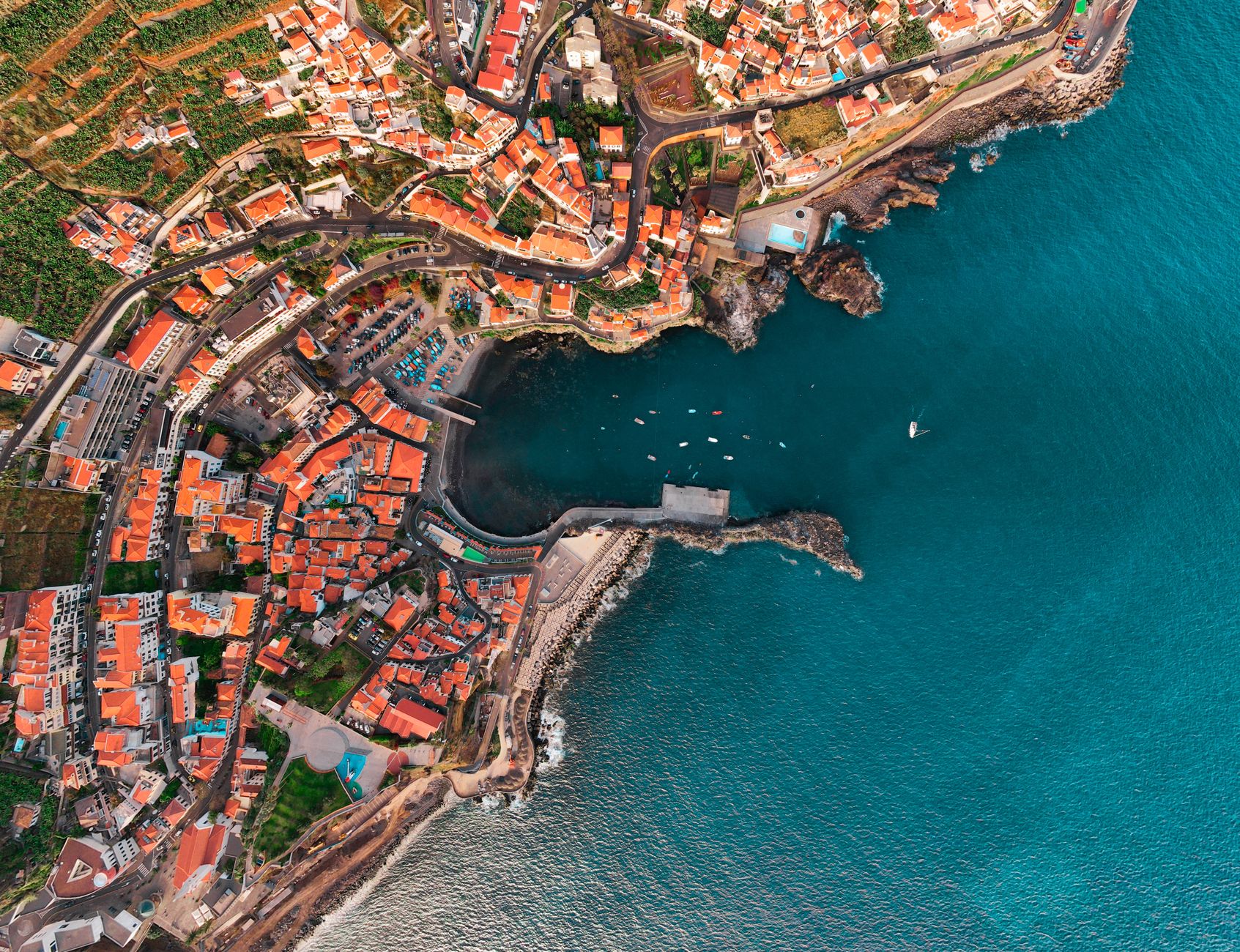
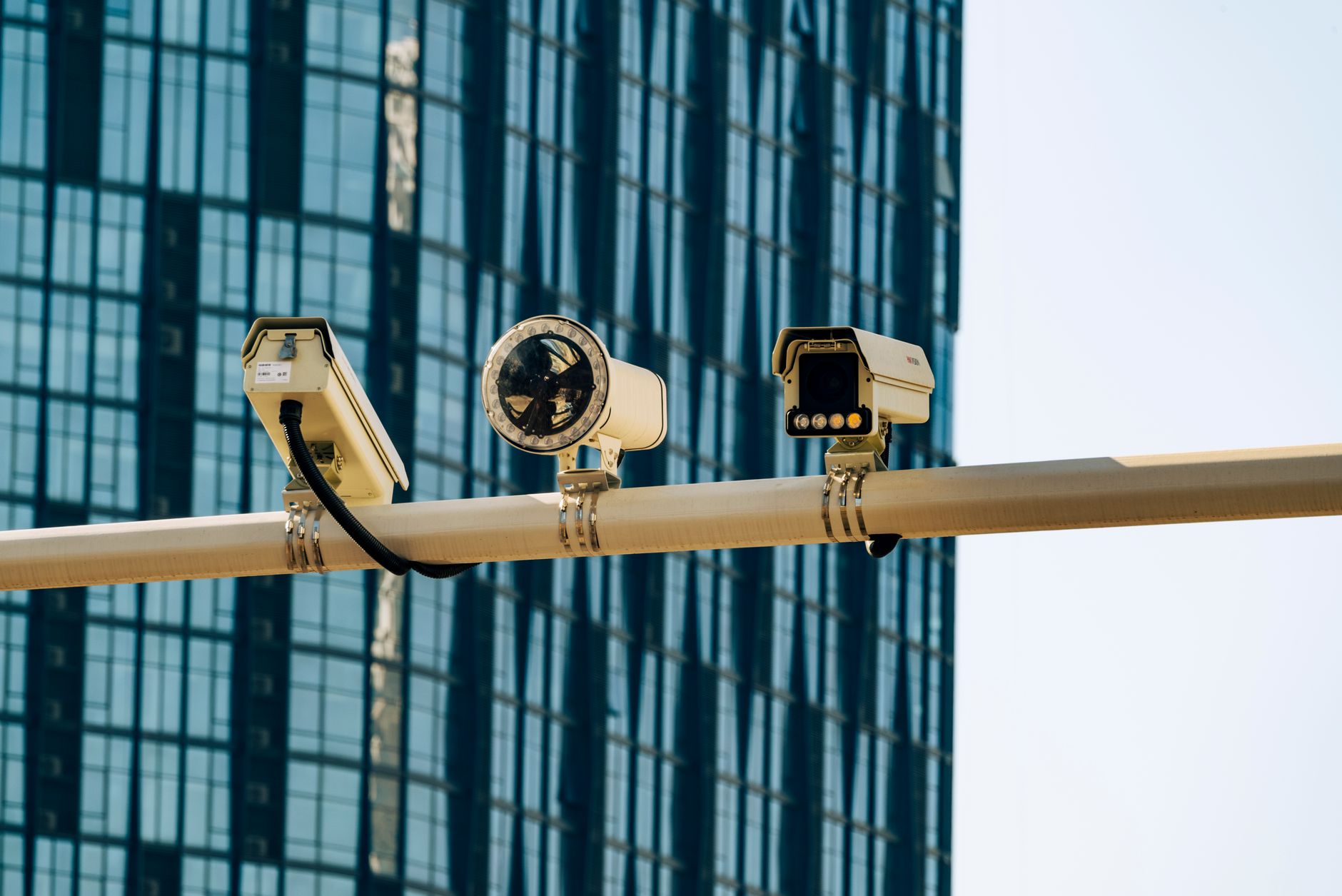
Infrared thermal imaging for maritime surveillance is gaining market momentum because it addresses three operational needs that visible cameras alone cannot solve: night-time visibility, target detection in difficult weather, and continuous unattended monitoring across ports and nearshore waters. Sea-surface reflection, low illumination, haze, fog, backlight, and glare can sharply reduce the effectiveness of visible-light cameras. Thermal imaging, by contrast, forms images from temperature differences between targets and the background, making it more sensitive to vessels, people in the water, buoys, engine heat sources, and abnormal thermal signatures around shoreline infrastructure.
How Does Infrared Thermal Imaging for Maritime Surveillance Work in Real Projects?
In maritime environments, the camera is not simply “watching the sea.” It is trying to separate weak, moving, partially occluded targets from a complex background. Water temperature changes slowly, but waves, humidity, solar heating, engine exhaust, and coastal structures all create thermal clutter. A practical maritime thermal imaging system therefore depends on the full chain: detector resolution, pixel pitch, lens focal length, NETD, frame rate, stabilization, image enhancement, alarm logic, and integration with radar, AIS, and video management platforms.
The first large-scale market is port perimeter security. A major port may have several kilometers to several dozen kilometers of shoreline, berths, trestles, tank-farm waters, restricted zones, fences, and approach channels. Traditional video surveillance often requires supplemental lighting and many camera points, while night-time false alarms remain high. A 640×512, 12μm uncooled LWIR module can cover many short- and medium-range monitoring tasks, including dockside berths, pier approaches, oil-storage waterfronts, and waters outside perimeter fences. For fixed domes, pan-tilt systems, and shore-based thermal cameras, SPECTRA L06A 640×512 LWIR 12μm is a practical baseline imaging unit.
A second market is channel and anchorage monitoring. Typical targets include small boats, inflatable craft, fishing vessels, vessels without AIS, floating obstacles, and drifting objects. When the requirement is to detect targets beyond 2–5 km, low-resolution thermal imagers can become the limiting factor for recognition and classification. A 1280×1024 LWIR or MWIR system provides more pixels on target and is often more valuable for wide-area search. SPECTRA L12NT 1280×1024 LWIR is well suited to high-pixel, wide-field thermal search where operators want to reduce pan-tilt scan gaps across open water.
A third application is maritime search, rescue, and law enforcement. A person in the water may have very low visible contrast at night, but human thermal radiation can remain distinguishable from the sea surface. Thermal cameras can be deployed on shore stations, patrol vessels, unmanned surface vessels, helicopters, and UAVs. On airborne or vessel-mounted platforms, system designers also need to consider weight, vibration, stabilization, low latency, and the ability to maintain target continuity during platform motion.
What Specifications Matter When Buying Maritime Thermal Cameras?
Procurement teams often begin with a simple question: “How far can it see?” That question is understandable, but distance claims alone are not enough for engineering selection. A reliable assessment should calculate target size, focal length, pixel pitch, detector resolution, NETD, frame rate, atmospheric conditions, and image-processing performance together.
Take a small boat about 2 m wide as an example. If the system must detect it reliably at 3 km, the target must cover at least several pixels on the detector. If the requirement is to recognize the vessel type, determine whether people are active on deck, or distinguish a small craft from a buoy, many more pixels are needed. Compared with 640×512, a 1280×1024 detector provides about four times as many pixels under the same lens field of view. This is a strong advantage for wide-water monitoring, anchorage surveillance, and long-range law-enforcement observation.
NETD is another critical specification. For maritime monitoring, buyers should typically look for NETD ≤50 mK, while higher-end systems may reach ≤40 mK or lower. Sea-background temperature contrast is often small, and high humidity can reduce thermal contrast further. A lower NETD helps the camera separate small targets from low-contrast backgrounds, especially before sunrise, after rain, or during humid night operations.
Frame rate should match the platform and target speed. For most fixed shore-based monitoring, 25–30 Hz is sufficient. For fast boats, vessel-mounted pan-tilt payloads, UAV platforms, and high-speed tracking, 50/60 Hz output is more appropriate. Interface selection also matters. MIPI is useful for embedded AI and compact imaging systems; GigE supports industrial network integration; Camera Link is common in performance-oriented imaging chains; HDMI and SDI are often preferred for video-system integration and long-distance display transmission.
Thermal Imaging vs Visible Cameras and Radar for Maritime Security
Thermal imaging does not replace every other sensor. Its value is strongest when used as part of a layered maritime security architecture. Visible cameras provide color, markings, vessel name, navigation-light color, and evidential imagery during daylight or under sufficient illumination. Radar provides long-range target detection and bearing information, especially in rain, fog, and low visibility. AIS provides identity and voyage data when vessels carry transponders and use them properly.
Thermal imaging fills the gap between these systems. It can detect unlit boats, people, warm engines, and abnormal shoreline heat signatures at night. It can also support confirmation after radar cueing, especially when radar detects a small or slow-moving target that is difficult for visible cameras to verify. However, thermal imaging cannot fully “see through” dense sea fog, heavy rain, or severe atmospheric attenuation. LWIR and MWIR both have major advantages in low light, but they still depend on infrared radiation reaching the sensor.
For this reason, stronger projects do not evaluate thermal imagers as isolated cameras. They specify how thermal video links with radar tracks, AIS targets, electronic fences, VTS systems, public-address systems, alarm rules, and emergency platforms. The camera must not only “see”; it must help operators decide what the target is, whether it is entering a restricted area, how it is moving, and whether the event requires response.
When to Choose Dual-Band Imaging and Edge AI for Maritime Surveillance
A single thermal channel is effective for target discovery, but it has limitations in target category recognition, vessel-name reading, buoy color identification, smoke interpretation, wave-splash discrimination, and evidence capture. For ports, coast guards, and critical waterfront facilities, visible + infrared dual-band imaging is becoming an important upgrade path.
A dual-band module such as FUSION LV1225A 1280×1024+2560×1440 can output both thermal imagery and high-definition visible imagery. This supports night-time discovery, daytime confirmation, algorithmic fusion, and remote evidence recording. In many real deployments, the thermal channel triggers the event, while the visible channel provides context and identification when conditions permit.
Edge AI is another market driver. Traditional maritime video systems depend heavily on manual patrol and operator attention. A duty officer cannot continuously monitor dozens of channels with equal concentration, especially during long night shifts. Edge AI can perform vessel detection, person detection, intrusion detection, line crossing, loitering, abnormal trajectory analysis, and front-end filtering before video is sent back to a central server. This reduces bandwidth, lowers server pressure, and shortens response time.
For equipment manufacturers that need infrared, visible imaging, and onboard recognition in a single architecture, NEXUS LV0619B AI multi-band Ethernet/SDI is aligned with this trend. The key is not only adding an AI label to the camera, but building a system that can handle low-contrast targets, small pixel footprints, wave movement, changing thermal backgrounds, and site-specific alarm rules.
What Standards and Compliance Issues Affect Maritime Imaging Projects?
Maritime surveillance projects are rarely single-camera purchases. They are usually integrated with VTS, port security systems, radar, AIS, broadcast systems, electronic fencing, command centers, and emergency-response platforms. Engineering teams should be familiar with the broader ship and marine technology standards environment, including the ISO/TC 8 Ships and marine technology committee: [ISO](https://www.iso.org/committee/45776.html).
For camera and image-quality evaluation, technical teams may also refer to the EMVA 1288 framework for objective camera performance characterization: [EMVA](https://www.emva.org/standards-technology/emva-1288/). For network video integration, ONVIF profiles and specifications are relevant when the thermal camera must connect with VMS, NVR, or security platforms: [ONVIF](https://www.onvif.org/profiles/).
The project entry barriers are mainly practical rather than theoretical. First, coastal salt spray, humidity, heat, strong wind, and vibration require reliable housing, window material, defogging, sealing, and anti-corrosion design. Second, the thermal camera must link with radar or AIS rather than operate as a disconnected video source. Third, acceptance tests often focus on false-alarm rate, missed-detection rate, continuous operating time, night-time recording quality, and the integrity of the evidence chain.
How to Build a Practical Maritime Thermal Imaging Selection Plan
For port perimeters, berths, dock monitoring, and nearshore restricted areas, 640×512 LWIR is often the most balanced choice. It controls cost while delivering strong night-time detection capability. For channels, anchorages, long-range law enforcement, and wide-area observation, 1280×1024 LWIR or cooled MWIR should be considered because pixel density and sensitivity become more important at distance.
If the project includes intelligent recognition, evidence capture, and remote verification, it is better to plan a dual-band + edge AI architecture from the start. Retrofitting intelligence later often means replacing the camera, changing the transmission chain, modifying the pan-tilt system, or adding server-side processing that increases cost and latency.
Manufacturers and system integrators should put the following items into the selection table: detection distance, recognition distance, field of view, detector resolution, pixel pitch, NETD, frame rate, lens options, interface, video protocol, anti-salt-spray design, window heating or defogging, pan-tilt linkage, radar/AIS integration, alarm outputs, and environmental reliability. Comparing only pixels and price is not enough for maritime projects.
The commercial opportunity is strongest where thermal imaging is tied to a measurable operational outcome: fewer blind spots along port perimeters, faster discovery of unlit boats, better night-time search and rescue, lower operator workload, and more reliable evidence for enforcement. These are the requirements that turn infrared thermal imaging from a camera component into a maritime surveillance solution.
FAQ: Infrared Thermal Imaging for Maritime Surveillance
Q1: Do maritime surveillance systems always need cooled infrared cameras?
No. Port perimeters, berths, and nearshore waters can often use uncooled LWIR cameras effectively. Cooled MWIR is more suitable for long-range small-target recognition, complex weather conditions, and higher-end law-enforcement missions.
Q2: Can infrared thermal imaging see through sea fog?
Not completely. LWIR and MWIR perform very well in darkness and low light, but dense fog, heavy rain, and high atmospheric attenuation will reduce infrared transmission. Engineering designs should combine thermal imaging with radar, AIS, and visible cameras.
Q3: Should I choose 640×512 or 1280×1024 for maritime monitoring?
Choose 640×512 for cost-sensitive, short- to medium-range monitoring. Choose 1280×1024 when the system needs a wider field of view, longer detection range, fewer pan-tilt scan gaps, or better recognition detail.
Q4: What makes AI recognition difficult in maritime thermal video?
The main challenges are wave reflections, floating debris, changing thermal backgrounds, very small targets, low pixel coverage, and changing vessel posture. Multi-band data, field training, and site-specific alarm tuning are usually required.