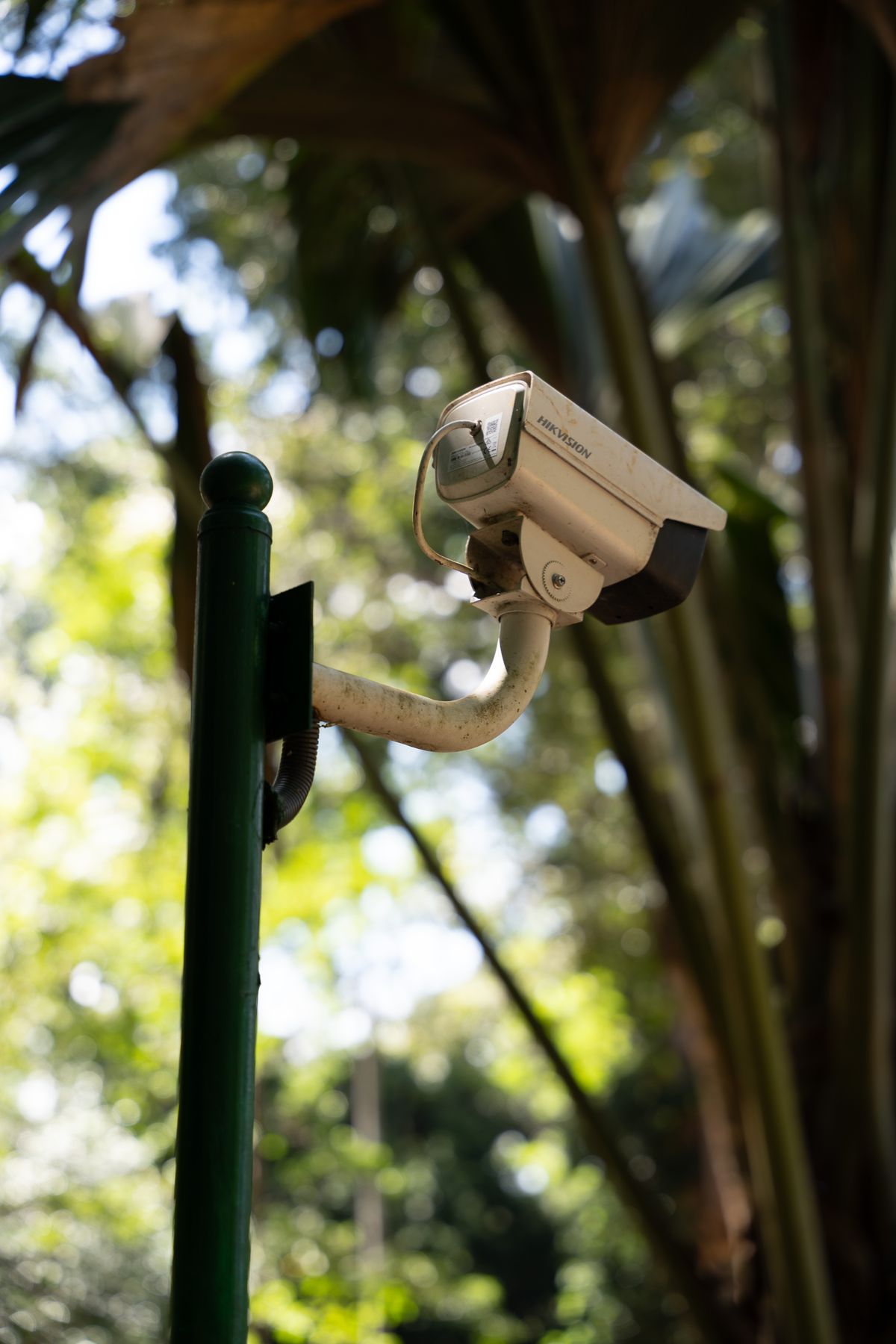
Selecting a thermal core for PTZ cameras is a system-level decision, not only a detector specification comparison. A pan-tilt-zoom camera must maintain usable imagery while the line of sight moves, the lens changes focal length, the scene contrast changes, and video is transmitted into a VMS, encoder, AI processor, or command system. For OEM engineers, the correct choice depends on detection range, spectral band, focal length, pixel pitch, resolution, frame rate, stabilization, latency, control interface, power, thermal management, and mechanical envelope.
How Does a Thermal Core for PTZ Cameras Affect Detection Range?
A thermal core affects range through spatial sampling, sensitivity, optical throughput, image processing, and spectral response. The detector does not determine range alone. A 640×512 sensor can outperform a higher-resolution core if it is paired with a better lens, lower F-number, cleaner stabilization, and more appropriate processing for the target and environment.
The first calculation is usually instantaneous field of view. IFOV is approximately pixel pitch divided by focal length. A smaller IFOV means each pixel covers a smaller angle, which improves target sampling at distance. For example, a 12μm pixel behind a 100mm lens has a smaller IFOV than the same pixel behind a 50mm lens. In PTZ systems, this matters because narrow zoom positions are commonly used for identification or fire-control-adjacent observation, while wide positions support search and situational awareness.
Sensitivity must be interpreted with the measurement conditions. NETD is normally quoted at a defined F-number, temperature, integration time, and processing state. A low NETD value is useful, but it does not replace target contrast, atmospheric transmission, aperture size, or focus quality. Humidity, rain, haze, maritime aerosol, and long horizontal paths can reduce apparent contrast enough that a nominal range estimate becomes optimistic.
Detection, recognition, and identification models are helpful for comparison, but they should be validated with the actual target class. A human, small vehicle, drone, vessel, or overheated electrical component presents different apparent size, thermal contrast, and motion signature. The engineering selection should define the required probability of detection, false-alarm tolerance, minimum target size, target speed, and operator or algorithmic interpretation path before choosing the detector format.
LWIR vs MWIR: Which Thermal Core Is Better for PTZ Cameras?
The main spectral choice is usually uncooled LWIR versus cooled MWIR. LWIR systems typically operate in the long-wave infrared atmospheric window and are widely used in security, perimeter, industrial, and vehicle observation because they can provide passive thermal imagery without a cryocooler. MWIR systems typically use cooled detectors and are selected when long-range performance, narrow-field imaging, high sensitivity, or high-speed imaging justifies the added power, cost, startup time, and cooler-life considerations.
The spectral terminology is standardized in optics and photonics references such as ISO 20473:2007. In practical PTZ design, however, the choice is less about terminology and more about the environment. LWIR is often suitable for fixed-site surveillance, perimeter observation, smart-city thermal monitoring, and many mobile platforms where size, weight, power, and maintenance are constrained. A module such as SPECTRA L06A 640×512 LWIR 12μm is a typical starting point when the OEM needs a compact uncooled thermal channel for PTZ integration.
Cooled MWIR is more often chosen for long-range border, coastal, airborne, or high-end security systems. The cooled detector can support lower noise and higher sensitivity, and MWIR optics can be effective for long focal lengths. A module such as SPECTRA M06A 640×512 Cooled MWIR 15μm may be appropriate where the PTZ camera must hold detail at long standoff distance and the platform can support cooler power, thermal dissipation, and lifecycle planning.
The trade-off is operational. Uncooled LWIR has simpler startup behavior and generally lower SWaP burden. Cooled MWIR can extend performance but introduces cryocooler warm-up time, acoustic and vibration considerations, maintenance planning, and a more demanding thermal design. For OEM programs, this decision should be tied to a written range requirement and environmental profile, not to a generic assumption that one band is always better.
When to Use 640×512 vs 1280×1024 Thermal Cores in PTZ Cameras
Resolution selection should begin with the required scene coverage and target sampling. A 640×512 core can be the correct choice for many PTZ cameras because it reduces bandwidth, processing load, optical cost, and integration complexity. It can also provide sufficient pixels on target when the lens focal length is chosen correctly. For many perimeter, vehicle, robot, and inspection systems, 640-class thermal imaging is a practical balance between image quality and system cost.
A 1280×1024 thermal core becomes more valuable when the PTZ camera must preserve wide-area awareness while still providing enough pixels for digital zoom, AI detection, or operator review. At the same field of view, the higher-resolution detector places more pixels across the scene. At the same detector pitch and lens family, it may also require larger optics, a larger image circle, more processing throughput, and more careful mechanical alignment.
For long-range observation, resolution alone does not solve insufficient focal length. If the optical system does not project enough target detail onto the detector, extra pixels may mainly sample more background. Conversely, when the lens and stabilization are adequate, a higher-resolution thermal core can improve target classification and reduce the need for constant optical zoom changes. A product such as SPECTRA L12NT 1280×1024 LWIR fits PTZ architectures that need high-resolution thermal coverage without moving into cooled MWIR complexity.
OEM teams should also evaluate frame rate and image pipeline behavior. PTZ cameras often track moving objects, and low latency can matter more than maximum still-frame detail. Higher resolution increases the load on ISP, compression, AI inference, storage, and network transmission. The correct format is the one that meets the range and workflow requirement within the allowable latency, power, enclosure, and cost limits.
How Do Lens, FOV, and Stabilization Work in PTZ Thermal Cameras?
The lens is often the limiting element in a PTZ thermal camera. Thermal zoom optics must maintain focus, transmission, and boresight alignment across temperature and focal length. A narrow FOV magnifies platform vibration and servo error, so a long-range PTZ camera needs adequate pan-tilt resolution, low backlash, stable mounting, and electronic or optical stabilization that does not destroy target detail.
F-number is critical because it affects photon collection and system sensitivity. A fast lens can improve signal, but it may increase size, cost, and focus sensitivity. Lens transmission depends on material and coating, and the protective window must be included in the optical budget. Germanium, chalcogenide glass, silicon, sapphire, and other materials each bring trade-offs in spectral transmission, durability, cost, and environmental behavior.
A PTZ camera that combines thermal and visible channels also requires boresight management. The two channels may have different FOVs, zoom curves, distortion, and focus behavior. If the visible camera is used for identification after thermal detection, the handoff must be repeatable across pan angle, tilt angle, zoom position, and temperature. Dual-band assemblies such as FUSION LV1225A 1280×1024+2560×1440 are relevant when the OEM wants thermal detection and visible context in a coordinated imaging architecture.
Stabilization should be tested at the final system level. A core that looks stable on a lab bench may produce unusable video on a mast, vehicle, vessel, or UAV if the PTZ mechanics introduce vibration. The test should include maximum zoom, expected wind or vehicle motion, encoder latency, image enhancement, and any AI or tracking loop. For narrow-FOV thermal PTZ systems, mechanical stability is part of the imaging chain.
What Interfaces and Video Standards Matter for PTZ Camera OEMs?
Core selection should include interface and control requirements early. A camera module may output raw digital video, processed digital video, MIPI, LVDS, parallel CMOS, SDI, Ethernet, or another interface depending on the product architecture. Raw output gives the OEM more control over image processing but increases development effort. Processed video reduces integration effort but may limit access to detector data, non-uniformity correction parameters, metadata, or custom enhancement.
Latency is especially important in PTZ cameras because the image is part of a control loop. Pan, tilt, zoom, autofocus, stabilization, object tracking, and operator joystick control all become harder if video delay is excessive or variable. The video path should be measured from detector exposure to encoded stream or display, not only from core output to processor input.
Security and VMS integration also matter. Many PTZ cameras are deployed in IP video systems where interoperability is expected. ONVIF Profile T is relevant because it addresses advanced video streaming, H.264/H.265, imaging settings, metadata, and PTZ-related interoperability in IP surveillance environments. OEMs should still verify the exact feature set required by the target VMS, since profile conformance does not automatically define every proprietary thermal control function.
Datasheet comparison should be disciplined. The EMVA 1288 framework is aimed at machine vision sensor and camera characterization, but its emphasis on defined measurement methods is useful when comparing imaging specifications. For thermal cores, OEMs should request measurement conditions for NETD, operability, frame rate, dynamic range, image correction, bad-pixel replacement, startup time, calibration behavior, and interface timing.
For OEM selection, the most reliable process is to start with the PTZ camera’s mission profile, then translate that profile into detector format, spectral band, lens range, stabilization tolerance, video interface, and environmental limits. The selected thermal core should match the complete camera architecture rather than a single headline specification.
For projects that combine imaging with wide-area detection, PTZ vs Fixed Thermal Cameras for Perimeter Projects explains the complementary radar or multi-sensor layer and how it supports target cueing and operational confirmation.
FAQ
What is the best thermal core for a long-range PTZ security camera?
For long-range PTZ security, cooled MWIR is often preferred when the system must observe small targets at long standoff distances and can support the cost, power, cooler, and thermal design requirements. Uncooled LWIR can still be the correct choice for many perimeter and fixed-site systems where range requirements are moderate and low SWaP is more important.
Is 640×512 enough for a PTZ thermal camera?
Yes, 640×512 can be sufficient when the lens provides enough pixels on target for the required detection or recognition task. A 1280×1024 core is useful when the system needs wider coverage, better digital zoom margin, or more pixels for analytics, but it also increases optical, processing, and bandwidth requirements.
Do PTZ thermal cameras need optical zoom?
Many PTZ thermal cameras benefit from optical zoom because wide-area search and long-range inspection require different fields of view. Fixed-lens thermal PTZ designs can work for constrained ranges or predefined scenes, but long-range surveillance usually requires a zoom lens or a multi-sensor architecture.
What interface should an OEM choose for a thermal PTZ camera?
The interface should match the processing architecture. MIPI or LVDS may be appropriate for embedded image processing, while Ethernet or SDI may simplify system-level video distribution. OEMs should evaluate latency, metadata, synchronization, control access, cable length, EMI behavior, and VMS compatibility before finalizing the core.